
Selecting the right glazing for modern architecture often involves a complex balance between aesthetic transparency and thermal efficiency. When stakeholders inquire about heat reflective glass price, they are rarely looking for a single number, but rather an understanding of the value proposition regarding energy savings and long-term operational costs.
Heat reflective glass, often achieved through specialized coatings or tinted compositions, serves as a critical barrier against solar heat gain. This technology reduces the reliance on heavy HVAC systems, directly impacting the total cost of ownership for commercial and residential buildings alike.
Understanding the drivers behind pricing—ranging from the type of coating to the precision of the tempering process—allows procurement managers to make informed decisions that align with both budget constraints and sustainability goals.

Analyzing the Core Cost Drivers of Solar Reflective Glass

The pricing of heat reflective glass is not static; it is a reflection of the material science and processing complexity involved. The primary cost variable is typically the coating technology—whether it is a hard coat applied during the float process or a soft coat applied in a vacuum chamber. These coatings determine how much infrared radiation is bounced back into the atmosphere before it can enter the building envelope.
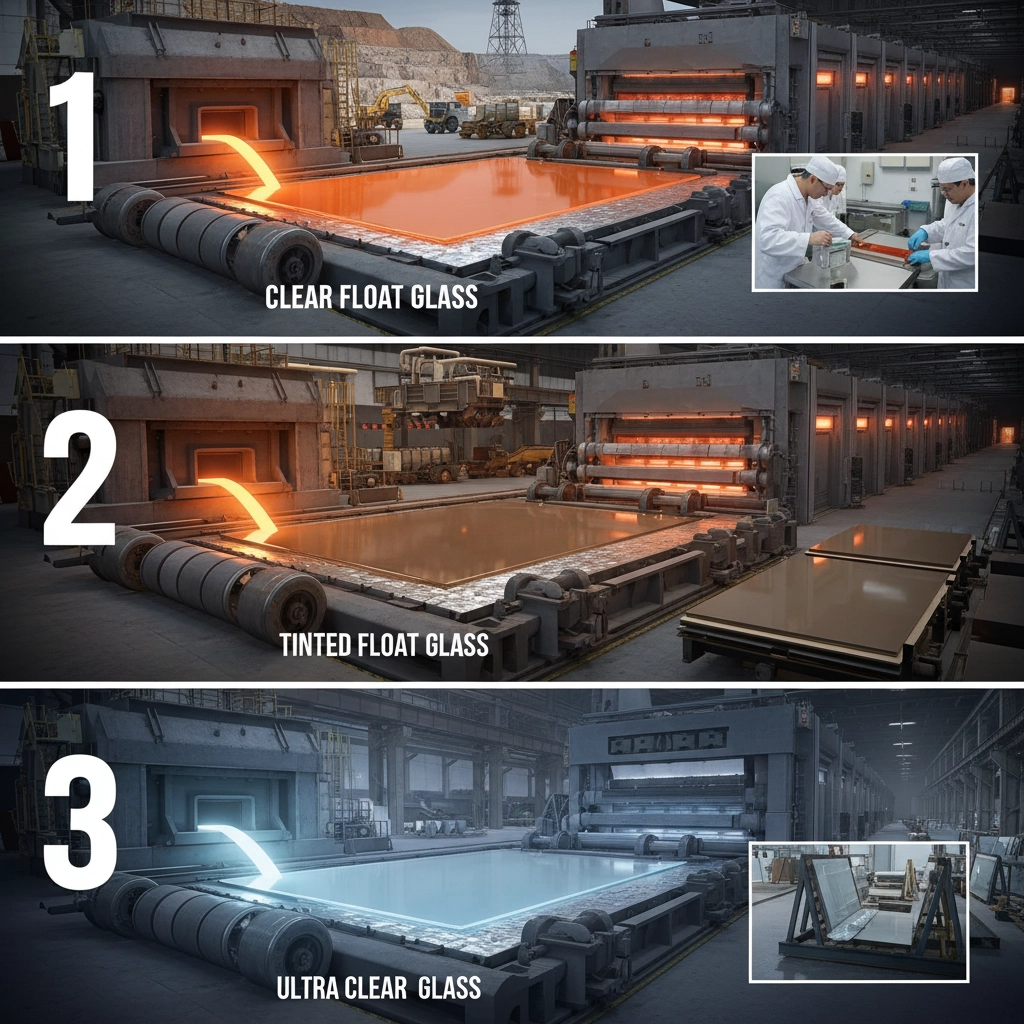
Beyond the coating, the base glass quality plays a significant role. The use of Ultra Clear Float Glass as a substrate can increase the price but significantly improves the visual clarity and color neutrality of the finished product. Additionally, the requirement for tempering or heat-strengthening adds a processing layer that ensures safety and prevents thermal stress fractures, which are common in highly reflective glass.
Furthermore, customization in terms of thickness and size impacts the final quote. Standard sizes are more cost-effective, whereas oversized panels for curtain walls require specialized handling and precision cutting, often utilizing advanced CNC work centers to maintain tight tolerances.
Technical Specifications and Thermal Performance Indicators
To evaluate the value of a specific glass product, one must look beyond the initial price and analyze the Solar Heat Gain Coefficient (SHGC) and the U-value. The SHGC measures the fraction of solar radiation admitted through a window; a lower SHGC indicates a more effective heat reflective capability, which translates to lower cooling costs during summer months.
The U-value, conversely, measures the rate of heat transfer; for high-performance solutions, heat reflective glass is often integrated into Insulated Glass Units (IGU). By combining a coated outer pane with a sealed air or argon gap and a clear inner pane, the thermal barrier is significantly enhanced, reducing heat loss in winter while reflecting heat in summer.
The durability of the reflective layer is also a key technical consideration. High-quality coatings are engineered to resist oxidation and environmental degradation, ensuring that the thermal performance remains consistent over the 20 to 30-year lifespan of the building facade.
Strategic Applications Across Commercial and Residential Sectors
In commercial architecture, heat reflective glass is indispensable for curtain wall systems in office skyscrapers. These structures often have massive glass surfaces that would otherwise create a "greenhouse effect," leading to unsustainable energy consumption for air conditioning. By utilizing reflective coatings, architects can maintain the "all-glass" aesthetic while keeping internal temperatures manageable.
Residential applications have shifted toward targeted use. Sunrooms and south-facing bedrooms benefit significantly from solar control glass, which prevents furniture fading and improves occupant comfort without sacrificing natural light. The integration of tempered reflective glass provides an added layer of safety for low-level windows or sliding doors.
Specialized environments, such as greenhouses or industrial warehouses, employ reflective glass to protect sensitive equipment or crops from excessive heat. In these cases, the choice of glass often depends on the specific spectrum of light that needs to be admitted versus the heat that must be rejected.
Comparing Energy Efficiency and Heat Gain Metrics
When analyzing the impact of heat reflective glass on a building's energy profile, the most telling metric is the reduction in peak cooling load. Standard clear glass allows a vast majority of solar energy to penetrate, forcing HVAC systems to work at maximum capacity during the hottest parts of the day.
By substituting standard glass with reflective options, the thermal load is redistributed. The following comparison illustrates the relative performance across key environmental factors, showing how reflective technology outperforms basic glazing in heat rejection and energy stability.
heat reflective glass price Performance Metrics
As evidenced by the performance delta, the higher initial investment in reflective glass is offset by the immediate reduction in energy expenditure. The stability of the interior environment also reduces the wear and tear on mechanical cooling systems, extending their operational life.
Procurement Framework for High-Performance Coated Glass
Procuring heat reflective glass requires a rigorous evaluation of the supplier's technical capabilities. A reliable partner should possess integrated processing lines—including tempering furnaces and CNC work centers—to ensure that the reflective coatings are not compromised during the strengthening process. Inconsistency in tempering can lead to "bowing" or optical distortion in reflective panels.
Buyers should request detailed technical data sheets that specify the light transmission percentage and the emissivity of the coating. It is also critical to verify the edge grinding and polishing quality, as poor edge work can lead to premature delamination of the reflective layers in laminated or insulated configurations.
Finally, logistical considerations cannot be ignored. Because reflective glass is often used in large architectural panels, the packaging must be specialized to prevent surface scratches, which are highly visible on mirrored or reflective surfaces. Eco-friendly, durable packaging is a hallmark of a professional fabrication supplier.
Future Trajectories in Solar Control Glazing Technology
The industry is moving toward "smart" solar control, where the reflective properties of the glass can change based on the external temperature or electrical current. Electrochromic glass represents the next evolution, allowing users to toggle between transparent and reflective states, though the current price point remains significantly higher than static reflective coatings.
Another emerging trend is the development of multi-band reflective coatings that can selectively block infrared heat while allowing a broader spectrum of visible light to enter. This reduces the "darkening" effect often associated with tinted reflective glass, offering a clearer view without the thermal penalty.
Sustainability is also driving the adoption of recycled glass substrates and more environmentally friendly coating materials. As carbon taxes and green building certifications (like LEED) become more stringent, the demand for glass that provides passive climate control is expected to grow, potentially driving economies of scale that lower the overall cost of entry.
Decision Matrix for Selecting Reflective Glass Solutions
Choosing the right reflective glass depends on the specific priority of the project—whether it is maximum heat rejection, visual clarity, or budget optimization. A high-reflectance silver mirror finish provides maximum heat bounce but limited visibility, whereas a subtle tinted coating balances privacy with light admission.
The following matrix provides a comparison of common reflective glass configurations based on technical and economic trade-offs to assist in the selection process.
| Glass Type | Thermal Efficiency | Visual Clarity | Cost Impact |
|---|---|---|---|
| Hard-Coated Reflective | Moderate | High | Low to Medium |
| Soft-Coated Low-E | Excellent | Very High | Medium to High |
| Tinted Heat-Absorbing | Moderate | Medium | Low |
| Reflective IGU (Double Glazed) | Superior | High | High |
| Silver Mirror Finish | Maximum | Low (Opaque) | Medium |
| Ultra-Clear Reflective | High | Maximum | High |
Ultimately, the decision should be based on a site-specific solar analysis. For buildings in tropical climates, a superior SHGC is the priority, whereas in temperate zones, a balanced U-value and solar gain are more beneficial for annual energy efficiency.
Frequently Asked Questions
Conclusion
Investing in high-performance reflective glazing is a strategic move that transcends the simple calculation of heat reflective glass price. By reducing peak thermal loads and enhancing the internal climate, this technology provides a tangible return on investment through lowered energy bills and increased building sustainability.
For developers and architects seeking a reliable glass fabrication partner to implement these solutions, reviewing the comprehensive processing capabilities and product ranges at www.mirrorglassfactory.com can provide the necessary technical context to ensure project success.