
When specifying glass for high-traffic commercial spaces or private residential zones, the balance between natural light transmission and visual privacy often becomes a primary design challenge. Many architects struggle to find materials that offer a sophisticated aesthetic without completely blocking the flow of luminosity, leading to a surge in demand for precision-engineered translucent surfaces. This is where the expertise of a professional frosted glass manufacturer becomes essential, providing the technical means to control light diffusion and surface texture with mathematical precision.
The complexity of selecting the right translucent glass lies in the variety of production methods—ranging from chemical etching to sandblasting—each altering the glass's structural integrity and light-scattering properties. In the broader context of deep processing glass manufacturing, frosted options are not merely decorative but serve critical functions in safety, thermal management, and psychological comfort within a built environment. Understanding the interplay between clear float glass and its frosted derivatives allows for a more intentional approach to architectural transparency.
Navigating the technical specifications of these materials requires a partner who can integrate various fabrication processes, such as tempering or laminating, into a single workflow. By analyzing the mechanical properties and aesthetic outcomes of different frosting techniques, buyers can avoid common pitfalls related to durability and maintenance. This guide examines the critical factors in selecting a frosted glass manufacturer and how to align technical capabilities with specific project requirements.


Frosted glass is created by treating the surface of clear float glass to diffuse light, preventing a clear image from forming while allowing brightness to permeate. This is achieved by introducing microscopic irregularities on the glass surface, which scatter incoming light rays in multiple directions. Depending on the desired level of opacity, manufacturers utilize either mechanical abrasion or chemical erosion to reach the specific micron-level depth required for the project.
In professional fabrication, this process must be tightly controlled to ensure uniformity across large panels. Inconsistent frosting can lead to "streaking" or "clouding," which compromises the architectural intent. By utilizing advanced acid etching lines and CNC work centers, the production process ensures that every square centimeter of the glass maintains the same refractive index, resulting in a seamless, velvety appearance that is essential for high-end interior design.
The quality of the final product is primarily determined by the precision of the surface treatment. Chemical etching, for instance, provides a smoother, more consistent finish that is easier to clean than sandblasted glass, which creates deeper, more jagged pits. The choice of method directly affects the glass's susceptibility to fingerprints and environmental pollutants, making it a critical decision for areas like shower enclosures or public partitions.
The most critical technical indicator for a frosted glass manufacturer is the consistency of the etching depth, as even a few microns of variation can significantly alter the light transmission percentage and the perceived privacy level of the installation.
Furthermore, the integration of secondary processes adds another layer of complexity. When frosted glass is combined with tempering or lamination, the timing of the frosting process is vital. Applying the frost after tempering prevents the heat of the furnace from altering the surface texture, ensuring that the intended aesthetic remains intact while the glass gains the necessary structural strength for safety-critical applications.
Specialized glass processing transforms a basic commodity into a high-performance building component. For global OEM/ODM customers, the value lies in the ability to customize the glass based on environmental stressors. For example, combining an acid-etched surface with a PVB interlayer for laminated glass creates a safety barrier that provides both privacy and impact resistance, reducing the risk of shards during a breakage event.
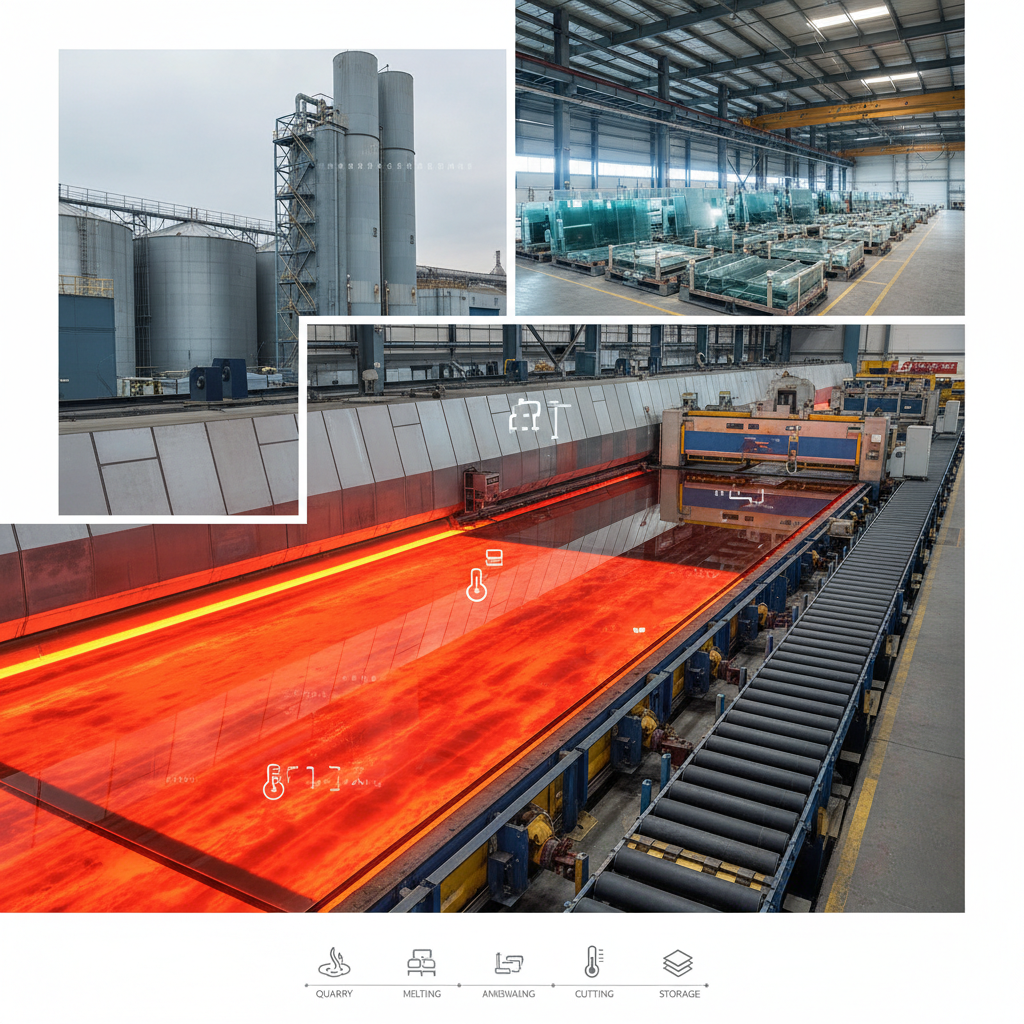
From an operational perspective, the use of integrated fabrication lines—including 45m-long tempering furnaces and Intermac CNC centers—minimizes the need for multiple hand-offs between suppliers. This vertical integration reduces the risk of dimensional errors and surface contamination, which are common when moving glass between separate cutting, grinding, and etching facilities.
In commercial office environments, frosted glass partitions are utilized to create "semi-private" zones that maintain an open-office feel while shielding sensitive discussions. The ability to specify different curvatures, through hot-bending processes, allows these partitions to follow the organic lines of modern architecture, creating fluid transitions between lobbies and executive suites.
Beyond interiors, the automotive and specialized infrastructure sectors rely on curved tempered and laminated frosted glass for windshields and scenic elevators. In these cases, the glass must not only diffuse light to reduce glare for the operator but also meet rigorous safety standards. The use of chemically strengthened curved glass ensures that these installations can withstand high pressure and impact without compromising the visual softness of the frosted finish.
The industry is moving toward "smart" translucency, where the degree of frosting can be simulated or modified through advanced coatings. While traditional acid etching remains the gold standard for permanence, new hybrid processes are emerging that combine ultra-clear float glass with nano-coatings to achieve an even softer diffusion of light, eliminating the "grainy" look sometimes associated with lower-quality frosted glass.
Another significant trend is the integration of sustainable manufacturing practices. The adoption of closed-loop acid recovery systems in etching lines reduces environmental impact while maintaining the high purity of the chemical agents. This ensures that the surface of the glass is free from impurities, which is critical for applications in laboratories or medical facilities where sterility and clarity are paramount.
We are also seeing a shift toward more complex geometries. The combination of waterjet cutting and 3D molding allows for frosted glass to be integrated into non-linear architectural elements, such as sculptural columns and custom skylights, expanding the role of the glass manufacturer from a parts supplier to a design collaborator.
One of the most frequent challenges for buyers is the discrepancy between a sample and the final bulk production. This usually occurs due to variations in the etching time or chemical concentration. To solve this, professional manufacturers implement strict parameter controls and provide "first-article" approvals for every batch, ensuring the opacity matches the approved benchmark.
Another hurdle is the conflict between the frosting process and safety requirements. Some etching methods can introduce surface tensions that might make the glass more prone to spontaneous breakage if not tempered correctly. The solution is a sequenced workflow: cutting, edge grinding, tempering, and finally frosting, which stabilizes the glass structure before the surface is modified.
Finally, maintenance of frosted surfaces in high-humidity areas often leads to soap scum or mineral buildup. By specifying a high-quality acid-etched finish over a sandblasted one, the surface remains smoother at a microscopic level, making it significantly easier to maintain without the use of harsh abrasives that could scratch the glass.
| Method | Surface Texture | Cleanability | Privacy Level |
|---|---|---|---|
| Acid Etching | Smooth/Satin | High | Consistent |
| Sandblasting | Coarse/Grainy | Low | Very High |
| Frosted Film | Flat/Plastic | Medium | Variable |
| Chemical Spray | Uneven/Matte | Medium | Moderate |
| Laser Etching | Precision/Patterned | High | Customizable |
| Patterned Casting | Embossed/Textured | Medium | High |
Acid-etched glass is produced using a chemical process that creates a smooth, satin-like finish, whereas sandblasting uses high-pressure abrasives to create a coarser, more pitted surface. Acid-etched glass is generally more resistant to fingerprints and much easier to clean, making it the preferred choice for high-touch areas like bathroom partitions and office walls.
Yes, frosted glass can be tempered, but the sequence of production is critical. To ensure maximum strength, the glass is typically tempered first and then frosted. This ensures that the heat treatment process does not destroy the frosted surface texture, resulting in a product that is both visually translucent and structurally safe for architectural use.
The opacity level depends on the desired balance between light transmission and privacy. High-opacity frosting is ideal for complete visual privacy in bathrooms or changing rooms, while low-opacity (satin) finishes are better for office partitions where the goal is to soften the light and obscure details without feeling enclosed.
Yes, frosted glass is more expensive because it requires additional processing steps such as chemical etching or mechanical abrasion. The cost varies based on the method used, the precision of the frosting, and whether secondary treatments like tempering or lamination are required for the specific application.
Maintenance should be performed using mild detergents and soft cloths. Avoid using abrasive scrubbers or harsh chemicals that can scratch the surface or strip the etched layer. For acid-etched glass, a simple glass cleaner and a microfiber cloth are usually sufficient to maintain the original satin appearance.
Yes, by utilizing hot-bending and curved tempering processes, frosted glass can be shaped into various curvatures and radii. This allows for the creation of curved shower enclosures, scenic elevators, and architectural facades that maintain a consistent frosted aesthetic across complex geometric shapes.
Selecting the right translucent glass involves more than just choosing an aesthetic; it requires a deep understanding of the technical trade-offs between diffusion, durability, and safety. By prioritizing precision in the etching process and ensuring a logical sequence of fabrication—from cutting to tempering—buyers can achieve a result that balances architectural beauty with long-term operational reliability.
Whether you are designing a modern corporate interior or a complex automotive component, partnering with a supplier that offers one-stop fabrication solutions is key to reducing errors and ensuring quality. For those seeking precision-processed glass tailored to OEM/ODM specifications, exploring the capabilities at www.mirrorglassfactory.com can provide the technical insight needed to bring your vision to life.