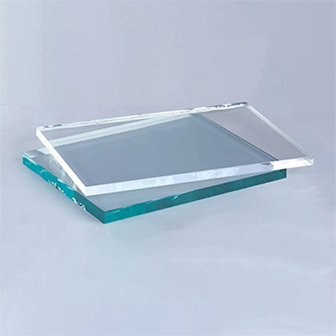

In the competitive landscape of architectural and industrial design, sourcing raw materials that offer consistent optical clarity and precise thickness tolerances is often a project's biggest hurdle. Architects and processors frequently face challenges with thickness variance or surface undulations that compromise the final aesthetic, especially when the glass is destined for tempering or mirror coating. The difference between a standard sheet and a premium substrate defines the success of the final installation.
Dongguan Jining Mirror Glass Co., Ltd. addresses this critical supply chain gap. Established in 2005, we have evolved beyond simple manufacturing to become a pivotal resource for high-grade substrates. By integrating strict quality inspection systems usually reserved for mirror production, we ensure that every sheet, from ultra-thin 2mm to robust 19mm, meets rigorous flatness standards. Our extensive experience in exporting to over 30 countries and regions allows us to understand diverse market regulations, ensuring your project receives material that is not only transparent but also technically compliant with global standards.
Selecting a supplier is not merely a transaction; it is an integration of technical capability. High-quality float glass serves as the foundation for complex deep processing tasks, including waterjet cutting, CNC edging, and bent tempering. Inferior glass often shatters under the stress of automated machinery or fails during the thermal tempering process due to microscopic inclusions or uneven stress distribution.
We leverage our internal deep-processing capabilities—including advanced CNC edging machines and flat/bent tempering furnaces—to benchmark the raw float glass we supply. Because we utilize these same materials for our own high-end antique and copper-free mirrors, our quality control is inherently higher than a standard trading supplier. We understand that whether the application is for heavy-duty structural glazing or delicate interior décor, the substrate must be flawless.
| Performance Metric | Industry Significance | Our Engineering Standard | Advantage |
|---|---|---|---|
| Thickness Tolerance (2mm-19mm) | Critical for framing fit and lamination bonding. | ±0.1mm to ±0.2mm (Thickness dependent) | Ensures seamless integration into precision profiles and CNC machinery. |
| Surface Planarity | Prevents optical distortion in reflective applications. | Mirror-Grade Float Quality | Superior visual clarity essential for high-end facades and mirrors. |
| Processing Resilience | Ability to withstand cutting and tempering without breakage. | Pre-tested on Waterjet & CNC lines | Reduces waste and downtime during downstream fabrication. |
| Chemical Purity | affects tint and coating adhesion. | High-purity silica mix | Optimized for further processing like silvering or tempering. |
True value engineering in glass procurement looks beyond the initial cost per square meter. It evaluates the total cost of ownership, which includes yield rates during processing, longevity of the installation, and logistics efficiency. Partnering with a proven 2mm to 19mm flat transparent float glass supplier like Dongguan Jining significantly mitigates risk. Our rigorous selection process ensures that the glass you receive has excellent corrosion resistance properties and is free from defects that cause spontaneous breakage.
By utilizing a supply chain optimized since 2005, clients benefit from economies of scale and mixed-loading capabilities. Whether you require a single thickness or a complex assortment ranging from thin electronics-grade glass to thick structural panels, our consolidated approach reduces shipping complexities. The chart below illustrates the efficiency gains in downstream processing when utilizing our premium-grade float glass compared to standard market alternatives.
Related products
Top Selling Products