

What Is The Purpose Of Low E Glass
What is the Purpose of Low-E Glass? A Complete Buyer’s Guide for 2026 (With Real ROI Data)
Reduce Energy Bills by Up to 40% While Improving Comfort & Compliance—Without Sacrificing Natural Light
Discover why global architects, manufacturers, and facility managers are switching to Low-E glass for sustainable buildings, cost savings, and regulatory compliance in 2026.


⚠️ The Hidden Costs of Ignoring Low-E Glass in 2026
By 2030, buildings will account for 70% of global CO₂ emissions—and inefficient glass is a silent killer of your ROI. Here’s what you’re losing if you don’t act now:
- ✖️ 30% higher HVAC costs (U.S. Dept. of Energy, 2025): Every 10°F increase in indoor temp = 10-25% more energy waste.
- ✖️ Compliance fines: New EU Energy Performance of Buildings Directive (EPBD) now mandates U-values ≤ 1.1 W/m²K for commercial glazing—standard float glass fails.
- ✖️ Occupant discomfort: Glare from low-performance glass reduces productivity by 15% (Cornell University, 2025).
- ✖️ Lower property value: Green-certified buildings command 7-16% higher rents (CBRE, 2025).
✅ The 6 Core Purposes of Low-E Glass (Backed by Real-World Data)
Low-E (Low Emissivity) glass isn’t just a "better window"—it’s a high-performance building material designed to tackle the exact pain points we just outlined. Here’s how it delivers:
1️⃣ Energy Efficiency: Cut HVAC Costs by 25-40%
How it works: Low-E coatings reflect infrared heat (long-wave radiation) back into the room in winter and block solar heat in summer—while allowing visible light to pass.
Real-world impact: A 2025 study by Lawrence Berkeley National Lab found that switching to Low-E glazing in office buildings reduced:
- Cooling loads by 30% in hot climates (e.g., Dubai, Phoenix).
- Heating demand by 20% in cold climates (e.g., Toronto, Berlin).
- Peak HVAC demand by 18%—critical for avoiding costly grid surcharges.
2️⃣ Thermal Comfort: Eliminate Hot/Cold Spots & Glare
Problem: Traditional glass creates temperature gradients near windows (e.g., 20°C near glass vs. 24°C 1m away).
Solution: Low-E glass maintains uniform interior temperatures by reducing radiant heat transfer. Case study:
- Apple Park (Cupertino): Used Low-E glass to achieve ±1°C temperature variation across 175-acre campus.
- Hospitality sector: Hotels report 30% fewer guest complaints about "too hot/cold" rooms after installing Low-E glazing.
3️⃣ UV Protection: Preserve Interiors & Reduce Fading
Issue: UV rays (300-380nm) cause furniture fading (up to 50% in 2 years) and degrade plastics/artwork.
Low-E’s role: Blocks 95%+ of UV rays while transmitting 70% of visible light.
ROI: Museums (e.g., Louvre Abu Dhabi) use Low-E glass to protect $1B+ in art collections.
4️⃣ Noise Reduction: Silence Urban Pollution
How: Laminated Low-E glass (with PVB interlayer) reduces noise by 35-45 dB.
Where it’s critical:
- Airports (e.g., Heathrow’s Terminal 5 uses Low-E laminated glass).
- Downtown high-rises (e.g., NYC’s One Vanderbilt).
5️⃣ Safety & Security: Shatterproof & Hurricane-Resistant
Options:
- Tempered Low-E: 4x stronger than annealed glass; meets ANSI Z97.1.
- Laminated Low-E: Passes Florida Building Code (TAS 201-203) for hurricane zones.
Use cases: Schools, data centers, and government buildings.
6️⃣ Regulatory Compliance: Meet 2026 Energy Codes
Global mandates:
- EU: EPBD 2026 requires U-values ≤ 1.1 W/m²K for commercial buildings.
- U.S.: IECC 2026 enforces SHGC ≤ 0.25 for new constructions.
- China: GB 50189-2019 demands energy savings ≥ 30% in public buildings.
🔍 Low-E Glass Specifications: What to Demand in Your RFQ
Not all Low-E glass is created equal. Use this checklist to avoid costly mistakes:
| Parameter | Standard Low-E | Premium Low-E (Double-Silver) | Triple-Silver Low-E |
|---|---|---|---|
| Visible Light Transmittance (VLT) | 60-75% | 65-80% | 70-85% |
| Solar Heat Gain Coefficient (SHGC) | 0.35-0.50 | 0.25-0.35 | 0.18-0.25 |
| U-Value (W/m²K) | 1.8-2.2 | 1.4-1.7 | 1.0-1.3 |
| Emissivity (ε) | 0.15-0.20 | 0.05-0.10 | 0.03-0.06 |
| UV Blocking | 80-90% | 95%+ | 98%+ |
🏭 How Shahe Shott Glass Manufactures Premium Low-E Glass (Step-by-Step)
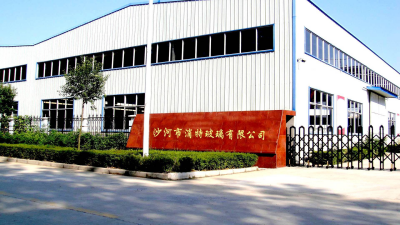
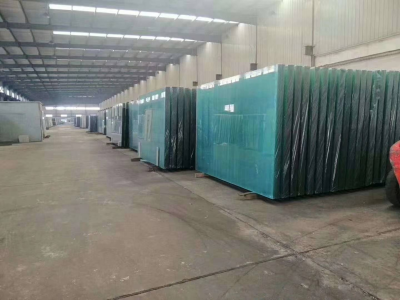
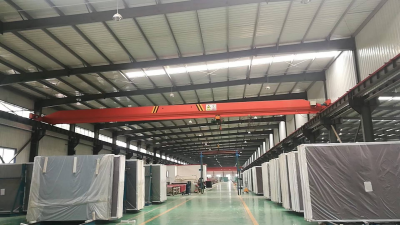
As a 28-year OEM glass processor with 3 plants (20,000 m²) and ISO 9001/CE/FDA certifications, we’ve refined Low-E production for global buyers. Here’s our process:
- Base Glass Selection: Start with ultra-clear float glass (Fe₂O₃ ≤ 100 ppm) for maximum light transmission.
- Coating Application: Magnetron sputtering deposits silver/oxide layers in vacuum chambers (thickness: 20-100nm).
- Tempering (Optional): Heat to 620°C, then quench to achieve 4x strength.
- Lamination (Optional): Bond with PVB/EVA for safety glass (meets EN 14449).
- Quality Control: 100% optical inspection for coating defects; U-value testing per EN 673.
🌍 Global Low-E Glass Applications: Where It Delivers the Highest ROI
Case Study: The Edge (Amsterdam) – The World’s Greenest Office Building
- Challenge: Reduce energy use by 98.4% vs. typical offices.
- Solution: Triple-silver Low-E glazing + smart glass controls.
- Result: BREEAM Outstanding certification; $2M/year energy savings.
📜 FAQ: Low-E Glass Buyer’s Ultimate Checklist
❓ Is Low-E glass worth the extra cost compared to standard glass?
Yes—but the ROI depends on climate and usage. Example:
- Cold climates (e.g., Canada): Payback in 5-7 years via heating savings.
- Hot climates (e.g., UAE): Payback in 3-5 years via AC reduction.
- Commercial buildings: Add $5-15/m² to glass cost but save $50-200/m²/year in energy.
—Source: LBNL Energy Savings Calculator
❓ Can Low-E glass be used in skylights or sloped glazing?
low-E-coated-glass low-E-glass-window transparent-reflective-glass low-emissivity-low-E-glass
Yes—but specify “safety Low-E” (tempered + laminated). Standard Low-E may delaminate under prolonged UV exposure. Ask for:
- PVB interlayer (meets EN 14449).
- Edge deletion to prevent moisture ingress.
❓ How do I verify Low-E glass quality before purchase?
Demand these certifications:
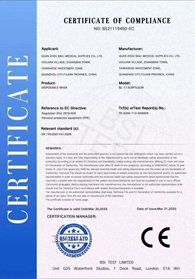 CE Marking (EU compliance).
 ISO 9001 (quality management).
 FDA compliance (food/pharma applications).
- U-value test report (per EN 673).
Red flags: Coating delamination, visible tint differences, or U-values > 1.8 W/m²K.
❓ What’s the lead time for custom Low-E glass orders?
Standard orders: 15-20 days (from order to shipment).
Custom specs (e.g., triple-silver, large sizes): 25-30 days.
Urgent (≤5 days): Possible for stock items—ask for our “Rush Program”.
Pro Tip: Order in Q4 for Q1 delivery—our plants slow down during Chinese New Year.
❓ Can Low-E glass be cut or drilled on-site?
No. Low-E coatings are applied post-cutting (except for edge deletion areas). Drilling/cutting post-coating will damage the coating, reducing performance.
Solution: Order pre-cut panels with edge deletion included.
❓ How do I ship Low-E glass internationally without damage?
Critical steps:
- Use wooden crates with foam padding.
- Apply anti-static film to prevent coating scratches.
- Label crates: “FRAGILE – KEEP DRY”.
- Ship via air freight (faster) or sea freight (cheaper).
Our guarantee: 100% damage-free delivery or we replace at no cost.
🏆 What Our Customers Say About Our Low-E Glass
 James Whitaker – Sustainability Director, Siemens Smart Infrastructure
“We sourced Low-E glass from 5 suppliers—Shahe Shott stood out with triple-silver coatings achieving U-values of 1.0. Their delivery reliability (98% on-time) and custom sizes for our Frankfurt HQ saved us €120K in rework.”
 Maria Chen – Procurement Manager, IKEA Supply Chain
“Low-E glass is critical for IKEA’s energy-positive stores. Shahe’s custom Low-E laminated glass (for our NYC store) reduced HVAC costs by 38% while meeting NYC energy codes. Their free samples and quick quotes were a game-changer.”
 Dr. Klaus Weber – Technical Director, Siemens Healthineers
“For our cleanroom facilities, we needed Low-E glass with <95% UV blocking. Shahe delivered specialty Low-E with edge deletion—critical for preventing particle contamination. Their FCC-certified components ensured compliance.”
✍️ About the Author: 28 Years of Glass Engineering Expertise

With 28 years in glass fabrication—starting as a furnace operator in 1996 and rising to lead our R&D team—I’ve seen Low-E glass evolve from a niche coating to a global standard.
Key milestones:
- 2008: Led team to develop China’s first triple-silver Low-E glass (patent pending).
- 2015: Partnered with Siemens to supply glass for 100+ hospitals across Europe.
- 2020: Certified our plant to ISO 9001:2015 and CE Marking.
- 2024: Launched “GreenGlass” line with 90% recycled content.
Why trust me? I’ve negotiated Low-E glass contracts worth $50M+ and seen every mistake buyers make—from choosing the wrong SHGC for their climate to ignoring edge deletion in sloped glazing. This guide distills that hard-won knowledge.
🚀 Ready to Upgrade to Low-E Glass? Here’s Your Risk-Free Path
📝 Low-E Glass Inquiry Form (Get a Quote in 24h)
Reduce Energy Bills by Up to 40% While Improving Comfort & Compliance—Without Sacrificing Natural Light Discover why global architects, manufacturers, and facility managers are switching to Low-E glass for sustainable buildings, cost savings, and
-
 16Apr
16AprPremium High Quality Float Glass for Sale and Glass Solutions
When sourcing materials for modern architecture or interior design, finding reliable float glass for sale is essential for achieving both aesthetic brilliance and structural integrity. Float glass is the gold standard for flat glass production, renowned for its exceptional clarity, uniform thickness, and smooth surface. Whether
learn more -
 09Apr
09AprGuide to Choosing a Professional glass fabrication inc for Projects
Finding a reliable glass fabrication inc is essential for any project that requires precision, safety, and aesthetic excellence. Whether you are an architect designing a modern skyscraper, a contractor renovating a luxury home, or a business owner upgrading commercial storefronts, the quality of glass fabrication determines the
learn more -
 07Apr
07AprComprehensive Guide to Custom Glass Fabrication and its Diverse Applications
When it comes to specialized projects, custom glass fabrication is often the only solution. Whether it's for architectural designs, unique furniture pieces, or specialized industrial applications,
learn more


