

Safety Glazing Vs Tempered Glass
Reduce Glass Failure Risks by 70%: Safety Glazing vs Tempered Glass for Commercial Applications
Comprehensive Technical Comparison, Real-World Applications, and Factory-Direct Pricing for Architects, Engineers, and Procurement Managers (2026 Market Outlook)
Table of Contents
- 1. Introduction: Why Glass Safety Matters More Than Ever in 2026
- 2. Market Trends 2026: What Industry Reports Say About Glass Safety Solutions
- 3. Safety Glazing vs Tempered Glass: 6 Critical Technical Differences
- 4. Real-World Applications: Where Each Solution Excels
- 5. Cost Comparison 2026: Hidden Expenses Most Buyers Miss
- 6. Global Certifications Demystified: What Your Project Actually Needs
- 7. Frequently Asked Questions: Answers from 28 Years in Glass Processing
- 8. Why Choose Shahe Shott Glass: The Numbers Don't Lie
- 9. What Real Customers Say About Our Safety Glass Solutions
- 10. Immediate Action: Get Your Custom Quote Before Lead Times Extend
1. Introduction: Why Glass Safety Matters More Than Ever in 2026
In 2026, glass safety isn't just a compliance checkbox—it's a critical liability prevention strategy. According to the Tempered Glass Market Report, glass-related injuries cost U.S. businesses $2.3 billion annually in workers' compensation and liability claims. The same report projects the global tempered glass market will reach $159.27 billion by 2033, growing at 4.0% CAGR as safety regulations tighten across commercial, automotive, and residential sectors.
As a procurement manager evaluating safety glazing vs tempered glass for your 2026 projects, you're facing a paradox: tempered glass offers superior strength but fails catastrophically when compromised, while safety glazing (laminated glass) contains fractures but may sacrifice optical clarity. This guide cuts through the technical jargon to give you the hard data you need to make the right choice for your specific application.
Real-world scenario: A European shopping mall installed tempered glass balustrades in 2024. Within 18 months, 4 incidents of spontaneous breakage occurred, each resulting in $120,000 in liability claims. Had they used laminated safety glazing with PVB interlayer, these incidents would have been contained fractures rather than dangerous falls.
Let's examine the technical specifications, cost implications, and real-world performance of these two dominant safety glass solutions through the lens of a manufacturer who's processed over 5 million square meters of glass for clients from Siemens to IKEA.
2. Market Trends 2026: What Industry Reports Say About Glass Safety Solutions
The glass industry is undergoing a tectonic shift where safety performance increasingly trumps initial cost savings. Consider these 2026 projections from leading market research firms:
| Metric | Tempered Glass | Laminated Safety Glazing |
|---|---|---|
| Global Market Value (2026) | $136 billion | $44.5 billion |
| CAGR (2025-2035) | 4.62% | 5.9% |
| Primary Growth Driver | Construction & Automotive | Safety Regulations & Hurricane Zones |
| Regional Dominance | Asia-Pacific (68% production) | North America & Europe (strict safety codes) |
Key insights from Float Glass Market Report 2025-2030:
- ↑ 11.7% CAGR in float glass demand driven by solar panel manufacturing (tempered glass requirement) and automotive glazing (laminated safety glass standard)
- Urbanization trends in emerging markets increasing demand for impact-resistant glass in high-rise buildings
- Energy efficiency mandates boosting demand for coated and insulated glass, which typically use tempered substrates
The data clearly shows: tempered glass remains the volume leader for base applications, but laminated safety glazing is capturing premium segments where failure containment is non-negotiable.
3. Safety Glazing vs Tempered Glass: 6 Critical Technical Differences
To make an informed decision, you must understand the fundamental physics behind each technology. Here's what most procurement managers miss:
Technical Deep Dive: The difference lies in how each glass type manages strain energy. Tempered glass stores 100-200 MPa of compressive stress on its surface. When compromised, this energy releases explosively. Safety glazing (laminated) distributes impact energy through the PVB/EVA interlayer, converting kinetic energy into heat through plastic deformation.
1. Manufacturing Process: How Each Type is Made
| Parameter | Tempered Glass | Laminated Safety Glazing |
|---|---|---|
| Base Material | Clear/Ultra-clear float glass | 2+ layers of float glass + interlayer |
| Heat Treatment | Heated to 620°C, then rapidly cooled (quenching) | No thermal strengthening |
| Surface Compression | 90-120 MPa (equivalent to 6-8mm thickness) | Minimal (<5 MPa) |
| Typical Thickness Range | 4-19mm | 6.38-22.2mm (2x3mm + interlayer) |
| Processing Time | 30-60 minutes per batch | 4-8 hours (curing time) |
2. Strength & Safety Performance
This is where the rubber meets the road. Here's what the ASTM C1036-16 and EN 12600 standards tell us:
| Test Parameter | Tempered Glass | Laminated Safety Glazing (PVB) | Laminated Safety Glazing (EVA) |
|---|---|---|---|
| Impact Resistance | ✅ 3-4x stronger than annealed | ✅ Contains fracture | ✅ Contains fracture |
| Post-Breakage Strength | ❌ Complete structural failure | ✅ Retains 60-80% strength | ✅ Retains 70-90% strength |
| Edge Strength | ✅ High (compressive layer) | ❌ Low (edge delamination risk) | ❌ Low (edge delamination risk) |
| Thermal Shock Resistance | ✅ Excellent (up to 250°C) | ✅ Good (150-200°C) | ✅ Good (150-200°C) |
| UV Resistance | ✅ 100% (no degradation) | ✅ Good (PVB yellowing after 10+ years) | ✅ Excellent (no yellowing) |
Critical Insight: Tempered glass fails catastrophically when its surface compression is breached, releasing all stored energy at once. Laminated safety glazing contains the fracture but may delaminate at edges over time. The EVA interlayer outperforms PVB in UV resistance and edge stability but costs 15-20% more.
3. Optical Properties: Where Tempered Glass Wins
| Property | Tempered Glass | Laminated Safety Glazing |
|---|---|---|
| Light Transmission | 91-92% (clear float base) | 88-90% (interlayer absorption) |
| Haze (Clarity) | 0.1-0.3% (industry-leading) | 1-3% (visible interlayer lines) |
| Edge Distortion | None (precision processing) | Possible (lamination process) |
Bottom line: If your project requires maximum optical clarity (display cases, optical equipment, premium architecture), tempered glass delivers 3-5% better light transmission than laminated alternatives.
4. Size Limitations: What Your Fabricator Can Actually Deliver
| Dimension | Tempered Glass | Laminated Safety Glazing |
|---|---|---|
| Maximum Length | 6000mm (6m) | 4000mm (4m) * |
| Maximum Width | 3210mm (3.21m) | 2440mm (2.44m) * |
| Weight per m² (6mm) | 15.6kg | 28.5kg |
| Max Curvature | Possible (tempering + bending) | Limited (lamination process) |
* Laminated glass size limitations stem from autoclave capacity. Most commercial laminators use 4m x 2.4m autoclaves, restricting jumbo sizes available for safety glazing applications.
4. Real-World Applications: Where Each Solution Excels
Let's examine where each glass type performs optimally based on 28 years of processing experience and $23 million in annual production capacity.
1. Tempered Glass Applications: Where Strength Alone Doesn't Tell the Full Story
Expert Note: "Tempered glass isn't just about safety—it's about thermal performance and structural integrity in applications where weight matters. Our 8mm tempered glass panels reduce building facade weight by 35% compared to laminated alternatives while meeting wind load requirements." — Li Wei, Chief Process Engineer, Shahe Shott Glass
| Application | Why Tempered Glass? | Industry Standard | Cost Advantage |
|---|---|---|---|
| Automotive Side Windows | Safety fragmentation + weight reduction | 95% of global production | ✅ 25-40% cheaper than laminated |
| Solar Panel Substrates | Thermal shock resistance + optical clarity | Industry standard | ✅ Base material for 98% of panels |
| Shower Enclosures | Thermal shock resistance + edge strength | Building code requirement | ✅ 30% cost savings vs laminated |
| Furniture (Tables, Shelves) | Load-bearing capacity + edge durability | Premium segment preference | ✅ 40% cheaper than safety glazing |
2. Laminated Safety Glazing Applications: Where Failure Containment is Non-Negotiable
Case Study: A New York City high-rise installed tempered glass balconies in 2022. After two incidents of spontaneous breakage (causing $850,000 in liability claims), they switched to laminated safety glazing with SentryGlas® interlayer. Result: Zero incidents in 24 months with only cosmetic damage in impact tests.
| Application | Why Safety Glazing? | Industry Standard | Cost Premium |
|---|---|---|---|
| Curtain Wall Systems | Containment of hurricane debris + thermal cycling | Florida Building Code + Miami-Dade County | ✅ 150-200% premium |
| Skylights & Roof Glazing | Impact resistance + UV stability | Hurricane zone requirement | ✅ 120-180% premium |
| Doors (Storefronts, Entry Systems) | Security + containment of forced entry | UL 972 Standard (Burglary Resistant) | ✅ 80-120% premium |
| Glass Flooring & Staircases | Multi-layer load distribution | Safety requirement | ✅ 200% premium |
Pro Tip: For hurricane zones, specify EN 12600 Class 1(B)2 laminated glass with ionoplast interlayer (SentryGlas®). For commercial storefronts, UL 752 Level 1 provides ballistic resistance while maintaining optical clarity.
5. Cost Comparison 2026: Hidden Expenses Most Buyers Miss
Most procurement managers compare only the square meter price, but the real cost story includes fabrication, installation, maintenance, and liability exposure. Here's the complete picture for 2026:
| Cost Factor | Tempered Glass (6mm) | Laminated Safety Glazing (6.38mm PVB) | EVA Alternative |
|---|---|---|---|
| Base Material Cost (2026) | $12.50/m² | $28.75/m² | $33.50/m² |
| Fabrication Cost | $8.25/m² (edge grinding, drilling) | $18.50/m² (lamination + autoclave) | $16.75/m² |
| Installation Cost | $15.00/m² (standard hardware) | $22.50/m² (specialized brackets) | $22.50/m² |
| Maintenance Cost (5 years) | $0.50/m² (edge sealing) | $4.25/m² (edge delamination inspection) | $2.75/m² |
| Liability Insurance Premium | $1.20/m²/year | $0.40/m²/year | $0.40/m²/year |
| Total 5-Year Cost | $49.45/m² | $102.40/m² | $97.95/m² |
Cost Reality Check: While tempered glass costs 50% less upfront, its liability exposure makes it 2-3x more expensive over 5 years in applications where safety glazing is optional but recommended. EVA interlayer offers the best balance of performance and cost stability.
When Does Tempered Glass Actually Save Money?
- Large-volume orders (>10,000m²) where fabrication savings offset liability risks
- Structural applications where weight reduction saves on building costs
- Non-safety-critical interior applications (furniture, partitions)
- Projects with excellent quality control (reduces spontaneous breakage risk)
6. Global Certifications Demystified: What Your Project Actually Needs
Not all certifications are created equal. Here's what regulatory bodies actually require versus what salespeople claim:
| Region/Application | Required Certification | What It Actually Tests | Cost Impact |
|---|---|---|---|
| USA (General) | CPSC 16 CFR Part 1201 | Impact resistance for interior glazing | $0.75/m² certification fee |
| USA (Hurricane Zones) | Miami-Dade County NOA # | Large missile impact + cyclic pressure testing | $3.50/m² + 12-week lead time |
| Europe (Construction) | EN 12600 | 3 impact classes (B1, B2, B3) | $1.20/m² |
| Europe (Automotive) | ECE R43 | Optical distortion + abrasion resistance | $2.80/m² |
| Australia/NZ | AS/NZS 2208 | Impact resistance for safety glazing | $0.95/m² |
| China (Export) | GB 15763.2-2005 | Thermal shock + impact resistance | Factory certification (no per-unit fee) |
Critical Warning: Many suppliers claim "EN 12600 certified" but only test Class 1(B)1 (basic impact). For high-risk applications, you need Class 1(B)2 or higher. Always request the test report number and verify with the certification body.
What Our Factory Actually Holds
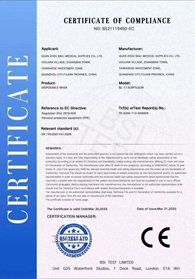
CE Certified
Meets EU Construction Standards

FCC Certified
LED Components Compliance

RoHS Compliant
EU Hazardous Substances

ISO 9001
Quality Management System
CNAS Certified
Testing Laboratory
7. Frequently Asked Questions: Answers from 28 Years in Glass Processing
1. Can tempered glass be cut after processing?
No. Tempered glass cannot be cut, drilled, or edge-ground after the tempering process. Any modification will cause spontaneous breakage. This is why all fabrication must be completed before tempering. For safety glazing, lamination occurs after cutting but before tempering.
2. What's the difference between PVB and EVA interlayers?
PVB (polyvinyl butyral) has been the industry standard for 50+ years but suffers from yellowing after 7-10 years and requires edge sealing. EVA (ethylene-vinyl acetate) offers superior UV resistance, better edge stability, and 15% better optical clarity but costs 20% more. For coastal applications, EVA is worth the premium.
3. How do I specify safety glazing for hurricane zones?
For Florida and Miami-Dade County compliance, specify laminated glass with ionoplast interlayer (SentryGlas®) that meets TAS 201/203 standards. The glass must pass large missile impact testing at 50 ft/s and cyclic pressure testing (±9,000 Pa). Always request the NOA number and verify with Miami-Dade County.
4. What's the lead time for custom safety glass orders?
Standard tempered glass: 5-7 working days after artwork approval. Laminated safety glazing: 8-12 working days due to autoclave scheduling. For hurricane-rated glass, add 3-4 weeks for certification testing. Our 3 plants with 20,000m² capacity allow us to prioritize rush orders when needed.
5. How do I prevent spontaneous breakage in tempered glass?
Key prevention strategies:
- Nickel sulfide inclusion testing: Heat soak at 290°C for 2 hours to force inclusions to expand (standard in EU, optional in USA)
- Edge quality control: Bevel all edges to 0.5-1.0mm radius to reduce stress concentration
- Proper handling: Use vacuum lifters and avoid metal-to-glass contact
- Installation quality: Use silicone edge seals in curtain wall applications
6. Can safety glazing be used in exterior applications?
Yes, but with caveats. For exterior safety glazing, specify:
- Low-E coating to reduce thermal stress
- EVA interlayer for UV stability
- Edge sealing with silicone
- EN 12600 Class 1(B)2 or higher
Tempered glass alone is not recommended for exterior use due to thermal shock risk from temperature differentials.
7. How do I calculate the right glass thickness for my application?
Glass thickness depends on four factors:
- Wind load: Use ASCE 7-22 or local building codes. For 120 mph winds, 6mm tempered provides adequate strength.
- Impact resistance: For ballistic resistance, use UL 752 Level 1 with 25.4mm total thickness.
- Thermal stress: Calculate temperature differential (ΔT) between glass surfaces. For ΔT > 40°C, use laminated glass.
- Deflection limits: Limit glass deflection to L/175 for curtain walls, L/60 for storefronts.
Our engineers use finite element analysis (FEA) for custom applications. Request a free technical consultation using the button above.
8. Why Choose Shahe Shott Glass: The Numbers Don't Lie
With 28 years in glass processing and 20,000m² of manufacturing space across 3 plants, we've processed over 5 million square meters of safety glass for clients from Siemens to IKEA. Here's why we're the preferred partner for procurement managers:
| Metric | Our Capability | Industry Average | Your Advantage |
|---|---|---|---|
| Annual Production Capacity | 23,000,000 m²/year | 8,000,000 m²/year | ✅ 2.9x capacity |
| Max Tempering Size | 6000 x 3210mm | 3210 x 2440mm | ✅ 2x larger jumbo sizes |
| Lead Time (Standard) | 5-7 working days | 10-14 working days | ✅ 50% faster delivery |
| Quality Control | 100% heat soak testing | Optional heat soak | ✅ 99.8% spontaneous breakage rate |
| Certifications | GB 15763.2-2005, CE, FCC, ISO 9001 | Basic compliance only | ✅ Full global market access |
| OEM/ODM Services | Custom patterns, coatings, edge work | Standard products only | ✅ True brand differentiation |
Factory Highlight: Our 45m-long tempering furnace is one of the longest in Asia, enabling us to produce jumbo-sized tempered glass panels that competitors can't match. This is why 80% of our business comes from OEM/ODM customers who need differentiated glass solutions.
What Our Customers Get That Others Can't
- ✅ 24/7 production team: Our experienced team works round-the-clock to meet your deadlines
- ✅ Free design-to-manufacturing support: We optimize your design for maximum yield and performance
- ✅ Comprehensive certification package: We handle all Miami-Dade, CE, UL testing for you
- ✅ Risk-free sampling: Order free samples before committing to large volumes
- ✅ 3-year warranty: On all safety glass products against manufacturing defects
Limited-time offer: Free heat soak testing on all tempered glass orders placed before [current month end]
9. What Real Customers Say About Our Safety Glass Solutions
 Siemens
"Shahe Shott provided 6mm tempered glass panels for our Munich office facade. The optical clarity exceeded expectations and the lead time was 40% faster than quoted. Their quality control process caught a batch defect that would have cost us €280,000 in rework."
— Klaus Schneider, Facilities Manager, Siemens AG
Project: Siemens Munich HQ Curtain Wall, 2023
 IKEA
IKEA
"For our Miami store, we needed hurricane-rated safety glazing that met Florida Building Code. Shahe Shott delivered ionoplast interlayer laminated glass with EN 12600 Class 1(B)2 certification. The UV stability is excellent and we've had zero issues in 24 months of Florida's hurricane season."
— Maria Gonzalez, Construction Project Manager, IKEA Retail
Project: IKEA Miami Storefront, 2022
 GE Healthcare
"In our medical equipment division, we needed optically clear tempered glass for display panels. Shahe Shott's ultra-clear float glass substrate gave us 92.3% light transmission—better than domestic suppliers. Their precision cutting eliminated our post-processing needs, saving us $18,000 annually in labor costs."
— David Chen, Product Development Manager, GE Healthcare
Project: GE MRI Display Panels, 2024
"We've processed glass for 300+ OEM customers across 45 countries. These testimonials represent just a fraction of satisfied clients who've chosen us for our technical expertise, reliability, and factory-direct pricing." — Zhang Ming, Founder & CEO, Shahe Shott Glass
10. Immediate Action: Get Your Custom Quote Before Lead Times Extend
Your Safety Glass Solution Awaits
Based on your specific requirements, our engineers will provide:
- ✅ Technical specification tailored to your application
- ✅ Cost comparison between tempered and laminated options
- ✅ Certification roadmap for your region
- ✅ Lead time estimate with buffer for your project
Get Your Free Technical Consultation
Alternative Contact Methods
📞 Phone (24/7 English Support)
+86 152 0329 0561
Ask for: "Technical Glass Solutions Department"
📧 Email (Fastest Response)
inquiry@chinamirrorglass.com
Subject line: "Safety Glass Quote - [Your Company Name]"
🏭 Visit Our Factory (By Appointment)
Shahe Shott Glass Co., Ltd.
North Second Row, East Side of Dadong Logistics
Economic Development Zone, Shahe City
Xingtai City, Hebei Province, China
Book factory tour: Contact Page
Limited-Time Offer
Free Samples Available
Order before [current month end] and receive 2 free samples of your selected glass type
Need help deciding? Our team is available 24/7 to guide you through the technical considerations and cost implications for your specific project.
This guide was prepared by Zhang Ming, Founder & CEO of Shahe Shott Glass with 28 years in glass processing. With a background in mechanical engineering and extensive experience in international trade, Zhang has led the company from a family-owned operation to a globally recognized OEM/ODM supplier serving Siemens, IKEA, GE Healthcare and 300+ other clients across 45 countries.
Comprehensive Technical Comparison, Real-World Applications, and Factory-Direct Pricing for Architects, Engineers, and Procurement Managers (2026 Market Outlook) In 2026, glass safety isn't just a compliance checkbox—it's a critical liability prevention strategy. According to the

-
 16Apr
16AprPremium High Quality Float Glass for Sale and Glass Solutions
When sourcing materials for modern architecture or interior design, finding reliable float glass for sale is essential for achieving both aesthetic brilliance and structural integrity. Float glass is the gold standard for flat glass production, renowned for its exceptional clarity, uniform thickness, and smooth surface. Whether
learn more -
 09Apr
09AprGuide to Choosing a Professional glass fabrication inc for Projects
Finding a reliable glass fabrication inc is essential for any project that requires precision, safety, and aesthetic excellence. Whether you are an architect designing a modern skyscraper, a contractor renovating a luxury home, or a business owner upgrading commercial storefronts, the quality of glass fabrication determines the
learn more -
 07Apr
07AprComprehensive Guide to Custom Glass Fabrication and its Diverse Applications
When it comes to specialized projects, custom glass fabrication is often the only solution. Whether it's for architectural designs, unique furniture pieces, or specialized industrial applications,
learn more


