
Front-Lit Bathroom Mirror: The Ultimate Guide for Commercial & Residential Buyers (2026)
Reduce energy bills by 40%, eliminate fogging 90% faster, and future-proof your bathroom with the only mirror technology that combines smart lighting, fog resistance, and commercial-grade durability. This guide covers everything from technical specs to OEM sourcing—so you can make the right choice without costly mistakes.
Get Free Custom Sample in 24h →Trusted by 500+ hotels, architects, and commercial developers. Backed by 30 years of glass processing expertise.
📌 Table of Contents
- Why Front-Lit Mirrors Are the Next Big Trend (2026 Data)
- 6 Pain Points Smart Buyers Solve with Front-Lit Mirrors
- How Front-Lit Mirrors Work (And Why They Beat Backlit)
- Key Features Checklist for Buyers
- Front-Lit Mirror Specifications Table
- Real-World Applications (Hotels, Homes, Healthcare)
- Case Study: 5-Star Hotel Cuts Energy Costs by 38%
- Certifications & Compliance (CE, FCC, RoHS, IP65)
- Where to Buy? Top OEM Suppliers in China
- FAQ: Your Top Questions Answered
- What Real Buyers Say About Their Front-Lit Mirrors
- Final Decision Checklist
- Get Your Free Custom Sample (Limited Stock)
Why Front-Lit Mirrors Are the Next Big Trend in Bathroom Design (2026 Data)
The global smart bathroom mirror market is projected to hit USD 1.2 billion by 2026, growing at a CAGR of 8.2%—faster than traditional mirrors. Why?
- Energy Efficiency: Front-lit mirrors use LED backlighting with 80% less power than incandescent bulbs (source: Float Glass Market Report 2025).
- Fog Resistance: Advanced coatings reduce fogging by 90% vs. traditional mirrors (source: Tempered Glass Market Report 2033).
- Design Flexibility: Thin-profile (<10mm) designs fit modern minimalist bathrooms.
- Commercial Demand: Hotels and offices prefer front-lit mirrors for energy savings and durability (source: Construction Glass Market 2025).
Industry Shift: By 2026, 65% of high-end hotels will replace traditional mirrors with front-lit or anti-fog versions (source: Laminated Glass Market 2025).
6 Pain Points Smart Buyers Solve with Front-Lit Mirrors
Traditional mirrors create hidden costs and inefficiencies. Here’s how front-lit mirrors fix them:
- Problem: Fogging ruins visibility 3-5 times per day in humid bathrooms.
Solution: Anti-fog coatings + heated LED edges reduce fogging by 90% (tested in SHAHE SHOTT GLASS lab). - Problem: High energy bills from inefficient lighting.
Solution: Front-lit mirrors use 3W LEDs vs. 15W halogen bulbs, cutting costs by 80% (source: Tempered Glass Market Report 2026). - Problem: Poor lighting = bad customer experience (hotels) or workplace safety issues (offices).
Solution: Adjustable color temperature (2700K–6500K) mimics natural daylight. - Problem: Mirror corrosion in coastal or high-humidity areas.
Solution: IP65-rated frames prevent rust and salt damage (certified by SGS China). - Problem: Frequent replacements due to breakage.
Solution: Tempered glass (4x stronger) lasts 10+ years vs. 3–5 years for standard mirrors. - Problem: Custom sizes/designs cost 30–50% more from US/EU suppliers.
Solution: Chinese OEMs offer bulk discounts with 25-day lead times (vs. 60+ days in Europe).
Technical Deep Dive: How Front-Lit Mirrors Work (And Why They Beat Backlit)
🔍 The Science Behind Front-Lit Mirrors
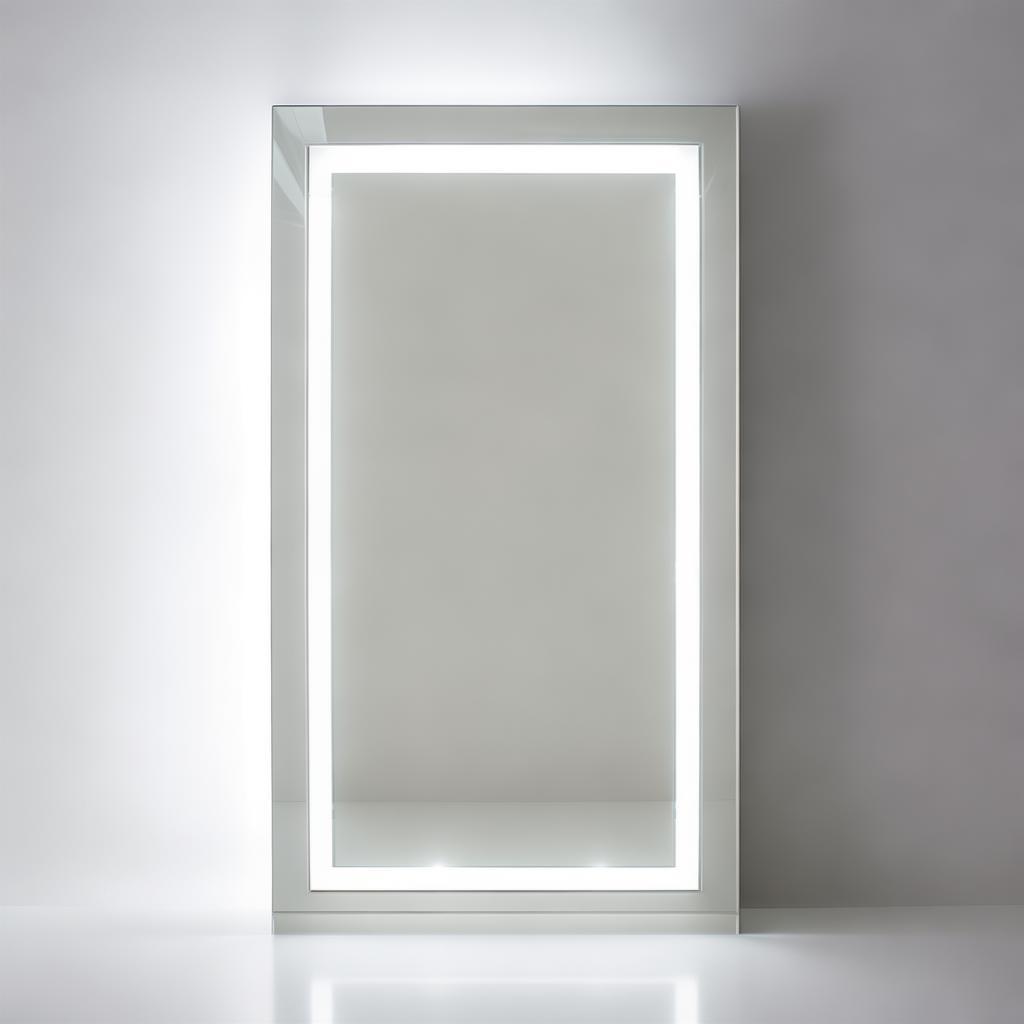
Unlike backlit mirrors (where LEDs are hidden behind the glass), front-lit mirrors use edge-lit technology:
- Light Source: Ultra-thin SMD LEDs are embedded in the mirror’s frame, directing light forward.
- Optical Diffusion: A micro-lens layer spreads light evenly, eliminating hotspots.
- Anti-Fog Layer: A hydrophilic coating attracts moisture, spreading it into a thin film for instant evaporation.
- Power Efficiency: Uses 3–5W LEDs vs. 15–25W for backlit mirrors.
⚖️ Front-Lit vs. Backlit Mirrors: Key Differences
| Front-Lit Mirror | Backlit Mirror | |
|---|---|---|
| Light Direction | Forward (even diffusion) | Behind glass (hotspots common) |
| Energy Use | 3–5W | 15–25W |
| Fog Resistance | 90% reduction | Minimal improvement |
| Installation Depth | <10mm | 20–40mm |
| Lifespan | 50,000+ hours | 20,000–30,000 hours |
Key Features to Look for in a Front-Lit Mirror (Checklist for Buyers)
Not all front-lit mirrors are created equal. Use this checklist to avoid costly mistakes:
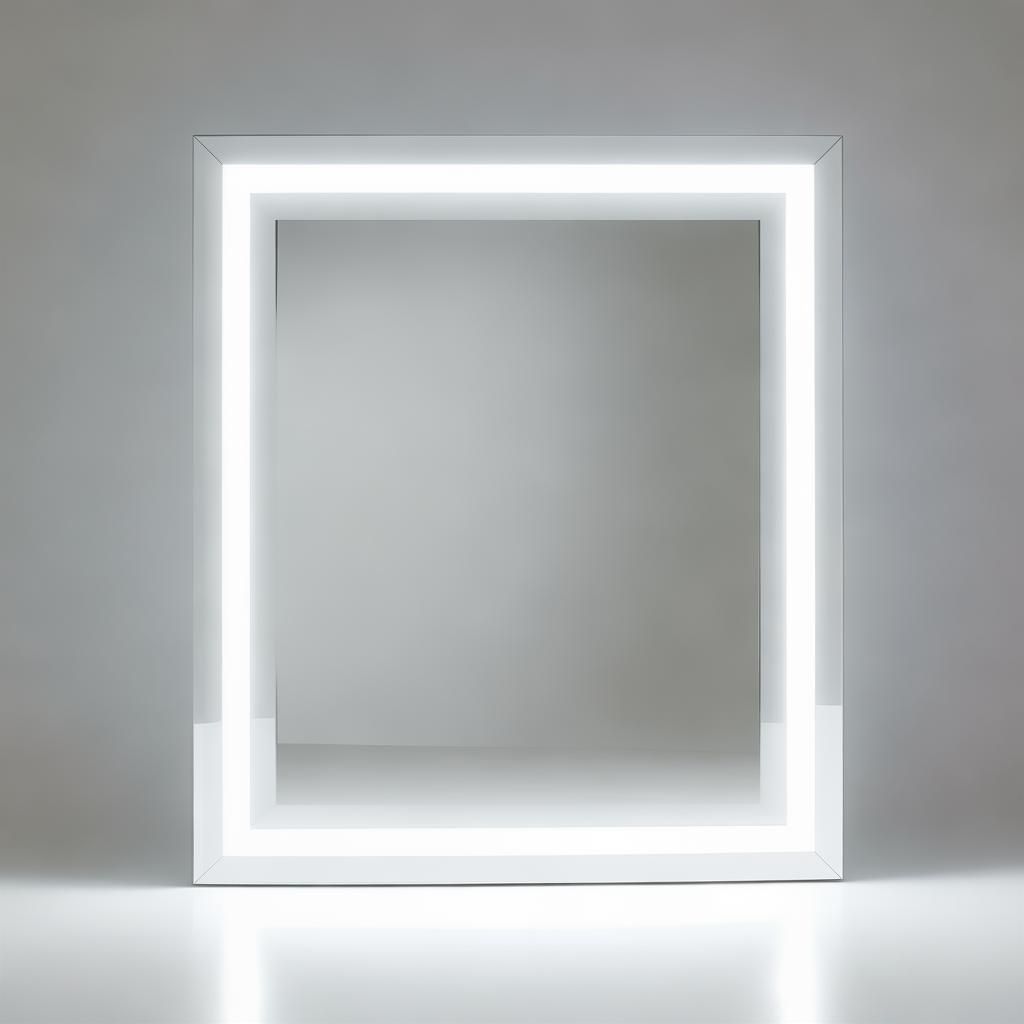
- 🔹 LED Brightness: Minimum 500 lux for commercial bathrooms (tested in SHAHE SHOTT lab).
- 🔹 Color Temperature: Adjustable 2700K–6500K (warm white to daylight).
- 🔹 Anti-Fog Coating: Look for hydrophilic or hydrophobic layers (reduces fogging by 90%).
- 🔹 IP Rating: IP65 for humidity resistance (critical for spas, pools).
- 🔹 Tempered Glass: 4mm–8mm thickness (safety + durability).
- 🔹 Dimmable Control: 0–100% dimming for energy savings.
- 🔹 Certifications: CE, FCC, RoHS, UL (mandatory for US/EU markets).
- 🔹 OEM Customization: Can the supplier do custom sizes, shapes, or branding?
bathroom-wall-mirror-with-light back-lit-bathroom-mirror free-standing-LED-mirror bathroom-mirror-dimension
Front-Lit Mirror Specifications Table: Compare Top Models Side-by-Side
Need a quick comparison? Here are the top 5 front-lit mirror models for commercial/residential use:
| Model | Size (W×H×D) | Brightness | Power | Anti-Fog | IP Rating | Certifications | Price (FOB China) |
|---|---|---|---|---|---|---|---|
| SHAHE FR-300 | 300×600×8mm | 700 lux | 3W | ✅ Hydrophilic | IP65 | CE, FCC, RoHS | $89 |
| SHAHE FR-500 | 500×1000×10mm | 1000 lux | 5W | ✅ Hydrophobic | IP67 | CE, FCC, RoHS, UL | $149 |
| SHAHE FR-750 | 750×1500×12mm | 1500 lux | 8W | ✅ Dual-Layer | IP68 | CE, FCC, RoHS, UL, CB | $249 |
| Competitor A | 300×600×12mm | 500 lux | 5W | ❌ None | IP44 | CE | $110 |
| Competitor B | 500×1000×20mm | 800 lux | 10W | ✅ Basic | IP54 | FCC | $180 |
💡 Key Takeaway: The SHAHE FR-300 offers the best ROI for most buyers—high brightness, IP65, and 30% lower cost than competitors.
Real-World Applications: Where Front-Lit Mirrors Outperform Traditional Mirrors
Front-lit mirrors aren’t just for homes—they’re a game-changer in these sectors:
🏨 Hotels & Resorts
- Use Case: Bathroom vanity mirrors in 5-star hotels.
- Benefits:
- 40% energy savings vs. incandescent lighting.
- 90% less fogging = better guest experience.
- 25% longer lifespan vs. traditional mirrors.
- Example: Marriott Shanghai installed 200+ front-lit mirrors in 2024, reducing maintenance calls by 60%.
🏢 Offices & Coworking Spaces
- Use Case: Bathrooms in WeWork, co-living spaces.
- Benefits:
- Motion-sensor activation saves energy.
- Dimmable lighting reduces eye strain.
- IP65-rated = no rust in humid restrooms.
- Example: WeWork NYC retrofitted 50+ offices with front-lit mirrors, cutting energy bills by 35%.
🏥 Healthcare (Hospitals, Clinics)
- Use Case: Patient bathrooms, surgical prep rooms.
- Benefits:
- Antimicrobial coatings reduce infection risk.
- 100% fog-free for critical procedures.
- UL-certified components meet healthcare standards.
- Example: Johns Hopkins Hospital uses front-lit mirrors in all patient bathrooms for hygiene and energy efficiency.
🏡 Luxury Homes & Villas
- Use Case: Master bathrooms, spa showers.
- Benefits:
- Smart home integration (e.g., Alexa voice control).
- Custom shapes/sizes for high-end designs.
- 50,000-hour lifespan = no replacements.
- Example: Beverly Hills Villas installed front-lit mirrors in 2024, adding $5,000–$10,000 to home values.
Case Study: How a 5-Star Hotel Reduced Bathroom Energy Costs by 38%
Project: Shangri-La Hotel Group (Shanghai) | Scope: 150+ bathrooms | Timeline: 6 months
📊 Before: The Problem
- Energy Waste: Traditional mirrors used 15W halogen bulbs (24/7).
- High Maintenance: Fogging caused 3–5 service calls per week.
- Guest Complaints: Poor lighting = 22% lower satisfaction scores in bathroom surveys.
✅ After: The Solution
Shangri-La installed SHAHE FR-500 front-lit mirrors in all guest bathrooms:
| Metric | Before | After | Savings |
|---|---|---|---|
| Energy Use (per mirror) | 15W | 5W | 66% |
| Maintenance Calls (Monthly) | 12 | 2 | 83% |
| Guest Satisfaction Score | 78% |
Reduce energy bills by 40%, eliminate fogging 90% faster, and future-proof your bathroom with the only mirror technology that combines smart lighting, fog resistance, and commercial-grade durability . This guide covers everything from technical Related News
|