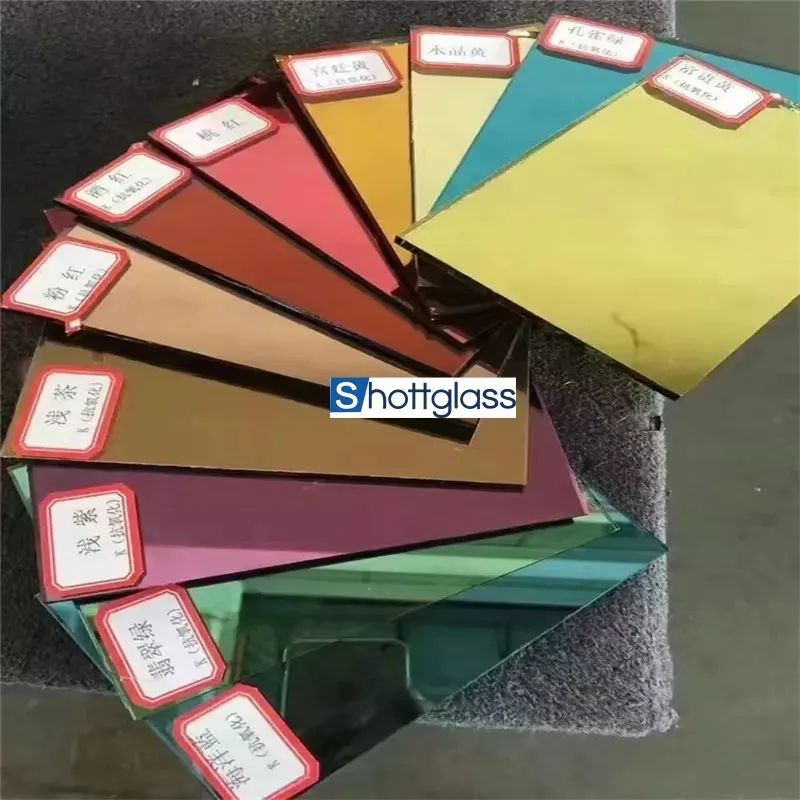

Professional Ultra Thin Glass and Frosted Glass Supplier
When engineering high-precision optical components or architectural elements, the choice of glass thickness and surface treatment often determines the overall performance of the end product. Ultra-thin glass, specifically within the 1.1mm to 2mm range, offers a unique balance of lightweight properties and structural integrity that standard glass cannot provide. For OEM and ODM partners, sourcing materials that maintain exceptional flatness while allowing for complex customized processing is critical to reducing assembly failures and improving light transmittance.
Whether it is the integration of solar cell cover layers to maximize energy conversion or the production of laboratory-grade coverslips, the technical requirements for surface stability and chemical resistance are stringent. By utilizing advanced float processes and chemical strengthening, manufacturers can now deliver ultra-thin solutions that resist corrosion and maintain optical clarity, effectively bridging the gap between fragile thin-film materials and heavy industrial glass.

Technical Advantages of Ultra-Thin Glass in Precision Engineering
Ultra-thin glass (1.1mm-2mm) is engineered to outperform ordinary glass in several key optical and physical dimensions. The most prominent advantage is outstanding transparency; due to the reduced material volume, light transmittance is significantly increased, which is a decisive factor for devices requiring high optical clarity. Furthermore, the float process ensures superb flatness and a smooth surface, meeting rigorous industry specifications that prevent image distortion in sensitive applications.
Beyond optics, durability remains a core focus. Despite the minimal thickness, these materials exhibit excellent corrosion resistance, allowing them to remain stable even when exposed to various chemical agents. This makes them suitable for environments where both weight reduction and chemical stability are required. To further enhance the mechanical properties, two primary strengthening methods are employed:
- Heat Strengthening: A cost-effective method that reduces processing time, although it may introduce slight deformation during cooling.
- Chemical Strengthening: A premium process that results in a perfectly smooth surface without distortion, providing superior impact resistance.

Industrial Applications Across Solar and Laboratory Sectors
The versatility of 1.1mm-2mm glass allows it to be integrated into diverse high-tech fields. In the renewable energy sector, ultra-thin glass serves as an ideal covering layer for solar panels. Its superior light transmittance directly improves the energy conversion efficiency of solar cells by increasing light absorption while shielding internal components from environmental degradation.
In the realm of electronics and displays, it is widely used for screen covers. When paired with anti-reflective (AR) or anti-glare (AG) coatings, it significantly reduces sunlight glare, enhancing visibility for outdoor interfaces. Additionally, the material's precision makes it the gold standard for slides and coverslips in laboratory settings, where flatness and purity are non-negotiable for microscopic analysis.
For high-end preservation, it is frequently utilized as picture frame glass. The combination of low weight and high clarity ensures that precious photographs are protected without adding excessive bulk to the frame, with anti-reflective options available to eliminate distracting reflections.
Customization Capabilities for OEM and ODM Integration
Meeting the specific needs of global OEM/ODM customers requires more than just raw material supply; it requires comprehensive deep-processing capabilities. Precision glass fabrication involves a series of specialized steps to ensure the final component fits perfectly into the intended assembly. Customization options typically include precise cutting to specific dimensions and professional edging to remove sharp boundaries and prevent stress fractures.
Advanced processing also includes drilling for mounting holes and surface coatings to achieve specific optical effects. The ability to choose between heat and chemical strengthening allows buyers to balance cost against performance requirements. By integrating these services, a reliable frosted glass supplier can provide a one-stop solution that reduces the need for multiple vendors, streamlining the supply chain and ensuring consistent quality across all batches of ultra-thin glass components.
Technical Comparison of Glass Strengthening Methods
| Feature | Heat Strengthening | Chemical Strengthening | Impact on Ultra-Thin Glass |
|---|---|---|---|
| Processing Time | Short / Fast | Long / Slower | Affects production lead times |
| Cost Efficiency | High | Moderate | Determines budget allocation |
| Surface Flatness | Possible Distortion | No Distortion | Critical for optical clarity |
| Strength Level | Moderate | High | Essential for screen covers |
| Surface Finish | Standard | Ultra-Smooth | Improves coating adhesion |
Evaluating Manufacturing Infrastructure for Glass Processing
When selecting a fabrication partner, the technical equipment available is the primary indicator of quality consistency. For ultra-thin glass, the precision of the cutting and grinding stages is paramount. The use of CNC work centers and professional cutting tables ensures that dimensions are held to tight tolerances, which is essential for components like laboratory slides or solar cover layers.
A comprehensive facility should ideally feature a diverse array of processing lines. For instance, a 45m-long tempering furnace allows for large-scale strengthening, while dedicated acid etching and silkscreen-printing lines enable the creation of matte surfaces or decorative patterns. The presence of PVB and EVA laminating lines further expands the possibility of creating safety glass composites, ensuring that the ultra-thin glass can be used in high-risk architectural or industrial environments without compromising safety.
Strategic Procurement Considerations for Technical Glass
Procuring ultra-thin glass requires a deep understanding of the trade-off between thickness, strength, and cost. While thinner glass generally results in lower material costs, the added requirement for chemical strengthening to prevent breakage can increase the final price. Buyers should evaluate their specific application—whether it is the high-impact environment of a screen cover or the static environment of a picture frame—to determine the most economical strengthening path.
Furthermore, the ability of the manufacturer to provide one-stop solutions—from cutting and edging to coating and strengthening—is a significant value driver. This integration minimizes the risk of damage during transport between different processing facilities and ensures that the final product meets all specifications in a single quality control cycle. For long-term OEM partnerships, prioritizing a supplier with a professional R&D team and a diverse equipment park is the most effective way to ensure product scalability and technological upgrades.
Frequently Asked Questions About Ultra-Thin Glass
Is ultra-thin glass easy to break?
Generally speaking, thin glass is more fragile than thick glass, has weaker impact resistance, and is easier to break if left unprocessed.
How to make ultra-thin glass stronger?
We have two ways to make our ultra-thin glass (1.1mm-2mm thickness) stronger: heat strengthening and chemical strengthening.
What are the pros and cons of the two strengthening methods?
Heat strengthening is faster and more cost-effective but can cause deformation. Chemical strengthening results in a smooth surface with no distortion but is more expensive and time-consuming.
Is ultra-thin glass more expensive than thick glass?
Since the material cost is lower, the price of ultra-thin glass is usually lower than that of thick glass.
What processing crafts are available for ultra-thin glass?
We offer ultra-thin glass cutting, edging, drilling, strengthening, surface coating, and more to meet customized needs.
Which strengthening method is best for optical screens?
Chemical strengthening is recommended for screens because it avoids the distortion associated with heat tempering, maintaining perfect optical clarity.
Technical References
- National Glass Association - Glass Standards
- ISO Standards for Flat Glass Fabrication
- ASTM International - Glass Testing Specifications
- Research on Ultra-Thin Glass Optical Transmittance
If you are seeking a professional partner for precision glass fabrication, our team is equipped to handle complex OEM/ODM requirements for ultra-thin glass. Contact us today for a technical consultation on your specific project needs.
Industry Insights and Guides